 Business License

3 minutes to understand: JJF 1257-2010 Calibration method for dry-type temperature calibrators
I. What is the standard used for?
Scope of application: Applicable to the calibration of dry-type temperature calibrators (referred to as "dry block calibration furnace") with a temperature range of -80℃ to 1300℃. The calibration temperature cannot exceed the range calibrated by the manufacturer.
II. What is a dry block calibration furnace?
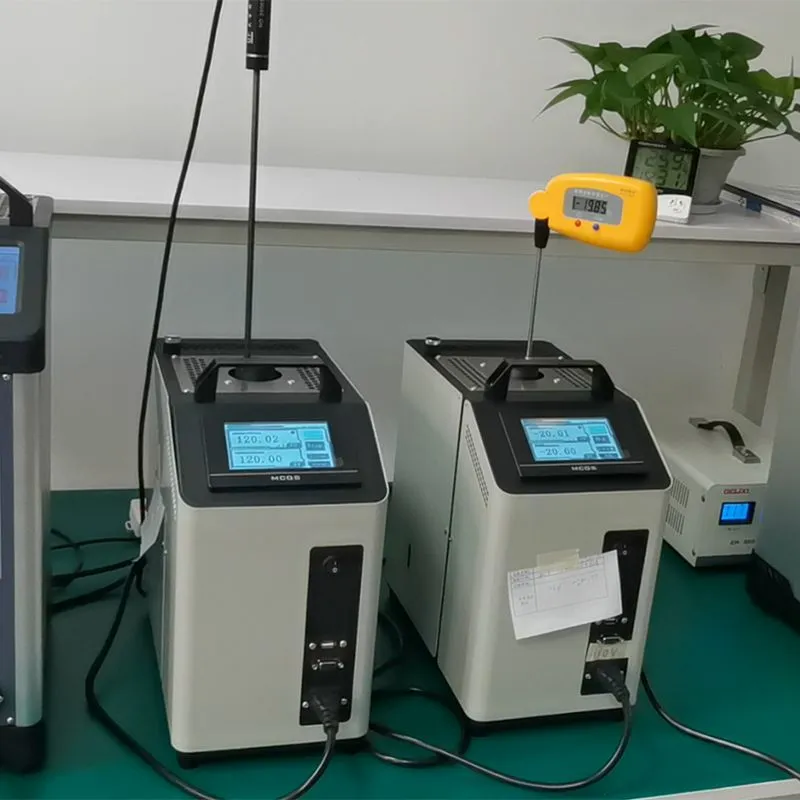
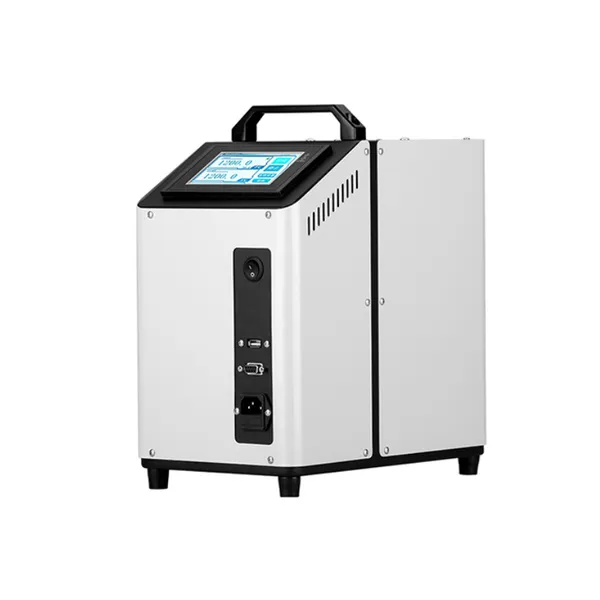
A dry block calibration furnace is a portable temperature calibration device with a metal temperature-isolating block at its core. By heating or cooling, the thermometer (such as thermocouple, platinum resistance, etc.) inserted into it reaches the same temperature as the temperature-isolating block, thereby calibrating the accuracy of the thermometer.
Key terms:
Measurement area: The area in the dry-type oven hole used for calibration, usually located at the bottom of the hole, with a length of ≥40mm.
Matching bushing: A metal sleeve used to fit thermometers of different sizes, which must be used according to the manufacturer's requirements.
III. Why is calibration required?
The displayed temperature of the dry-type oven may deviate from the actual temperature, and calibration can ensure that it provides a stable and uniform temperature environment. Factors that affect calibration accuracy include:
Temperature fluctuation (changes over time)
Temperature difference between different temperature measuring holes
Uneven axial temperature distribution
Number and size of inserted thermometers
IV. Preparation conditions before calibration
Environmental requirements: temperature 15℃~35℃, humidity ≤85%.
Equipment requirements:
Thermometer outer diameter ≤6mm, insertion depth ≥15 times outer diameter.
The supporting electrical measuring equipment needs to be high-precision, and the thermometer needs to be traceable and calibrated.
Bushing selection: Use an adapter metal bushing as specified by the manufacturer.
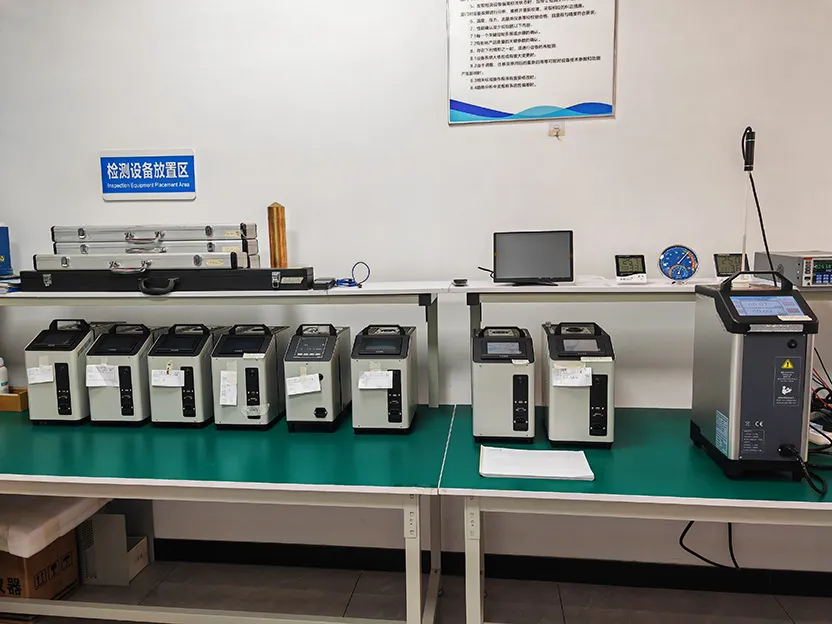
V. Core steps of calibration
1. Temperature deviation calibration
Method: Compare the dry body furnace display value with a high-precision reference thermometer.
Steps: Set the calibration temperature point (at least 3), measure the temperature rise and fall once, and take the average value.
Formula: Deviation = dry body furnace display value - reference thermometer measured value.
2. Calibration of other key indicators
Temperature fluctuation: half of the maximum temperature fluctuation value within 20 minutes (for example: fluctuation ±0.5℃).
Inter-hole temperature difference: measure the maximum temperature difference between different holes.
Axial temperature field uniformity: measure the temperature difference at the bottom, middle and top of the hole.
VI. What does the calibration report contain?
Temperature deviation and uncertainty of the dry body furnace.
Temperature fluctuation, inter-hole temperature difference, axial temperature field uniformity and other indicators.
Calibration environment, equipment information, traceability certificate, etc.
VII. Usage and maintenance suggestions
Correct operation:
The thermometer is inserted deep enough to ensure good contact.
Preferentially use the center hole for calibration and place the dry body furnace vertically.
Regular inspection: It is recommended to calibrate once a year, or verify regularly with a standard thermometer.
Notes:
At high temperature (>660℃), the gap between the thermometer and the hole is ≤1mm.
Thermometers with an outer diameter of >6mm require additional evaluation of thermal conductivity error.
Summary
JJF 1257-2010 provides a standardized process for dry block calibration. The core is to ensure the accuracy of the temperature display by comparing with the reference thermometer. Calibration needs to pay attention to indicators such as temperature deviation, fluctuation, uniformity, and regular maintenance. Following the standard operation can greatly improve the reliability of thermometer calibration.
Recently Posted
-
Principles of Blackbody Radiation Sources
April 14, 2026Principles of Blackbody Radiation SourcesAll objects emit electromagnetic radiation within a specific range of wavelengths. Radiat Read More
 -
Method for Calibrating Thermocouples Using a Dry-Block Calibrator
April 8, 2026Method for Calibrating Thermocouples Using a Dry-Block CalibratorDuring operation, the hot junction of a thermocouple is subject t Read More
 -
Basic principles and temperature measurement errors of resistance temperature detectors (RTDs)
March 12, 2026Resistance temperature detectors (RTDs) are commonly used temperature sensing elements in the medium and low temperature range. Th Read More
 -
The main differences between metrological calibration and verification
March 12, 2026ISO 10012—1, "Quality assurance requirements for metrological testing equipment," defines "calibration" as: &q Read More

Contact Us
Recommended Products
-
 DY-JDL600 High-temperature Thermocouple Calibration Tube FurnaceNegotiableMOQ: 1 Piece
 -
Laboratory High Precision Thermocouple Calibration Furnace/ Thermocouple Calibration FurnaceNegotiableMOQ: 1 Piece
-
DY-XJY01B Portable Multi-Channel Temperature and Humidity Field Testing SystemNegotiableMOQ: 1 Set
-
DY-JDL600 Thermocouple Calibration Furnace(300-1200c)NegotiableMOQ: 1 Piece
-
DY-JDL Horizontal Laboratory Temperature CalibrationNegotiableMOQ: 1 Piece
-
Portable Multi-Channel Temperature and Humidity Field Testing SystemNegotiableMOQ: 1 Set
-
Portable Multi-Channel Temperature and Humidity Field Testing SystemNegotiableMOQ: 1 Set
-
DY-JDL Laboratory Temperature Calibration / Thermocouple Calibration FurnaceNegotiableMOQ: 1 Piece
-
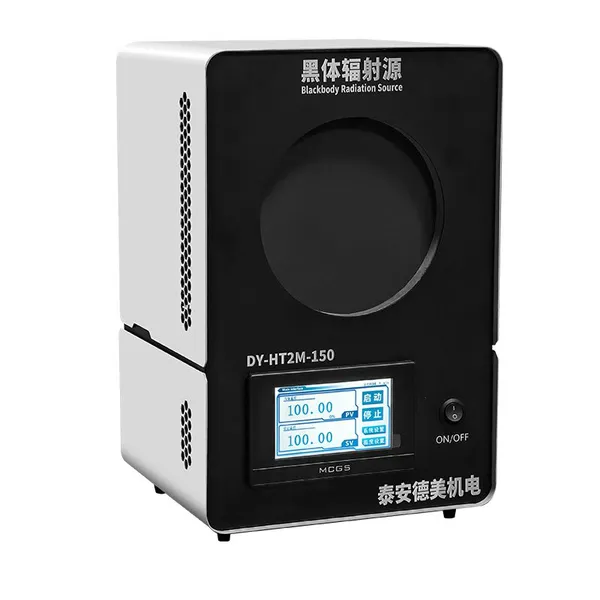
DY-HT2M-150 Medium Temperature Surface Source Blackbody Furnace, Radiation Surface 150mm (room Temperature +5-500℃)NegotiableMOQ: 1 Piece
-
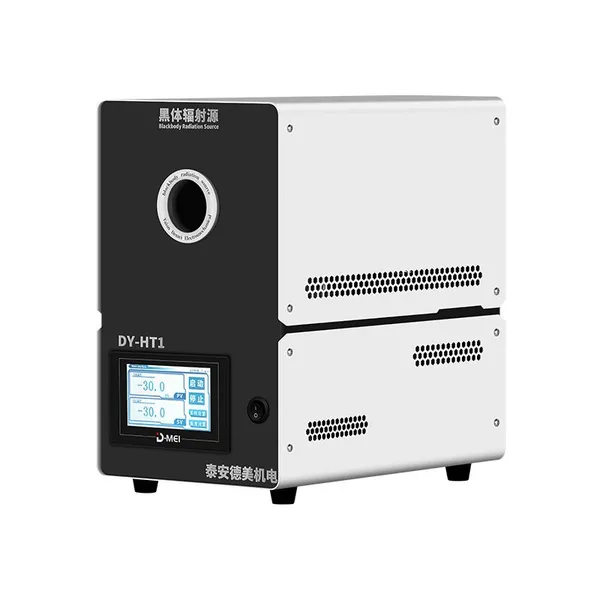
DY-HT1 Cavity Blackbody Radiation SourceNegotiableMOQ: 1 Set
-
DY-HT1M-150 Low Temperature Surface Source Black Body Furnace, Radiation Surface 150mm (-20-100℃)Infrared Thermometer Calibration InstrumentNegotiableMOQ: 1 Piece
-
DY-GTLB Transformer Oil Level Thermometer Detection Device (-20℃-150℃)NegotiableMOQ: 1 Piece
-
DY-HT4-1 Blackbody Furnace/blackbody Radiation Source (800℃-1450℃)NegotiableMOQ: 1 Piece
-
DY-HT70MD Portable Intelligent Multi-faceted Blackbody Furnace (room Temperature +5°C~150℃)NegotiableMOQ: 1 Piece
-
DY-HT50M Portable Blackbody Furnace, Radiation Surface 50mm (room Temperature +5℃-500℃)/Infrared Thermometer Calibration InstrumentNegotiableMOQ: 1 Piece
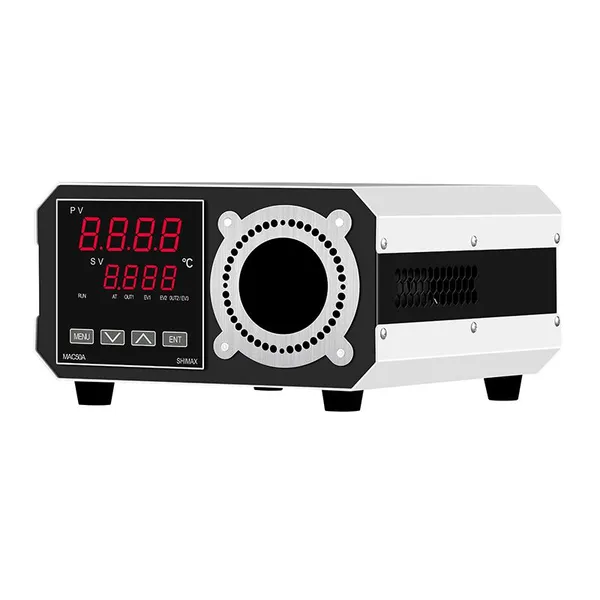
-
DY-JDL Thermocouple Calibration FurnaceNegotiableMOQ: 1 Piece
-
DY-JDL Laboratory Temperature Calibration Base Metal Thermocouple Calibration Furnace (300-1200c)NegotiableMOQ: 1 Piece
-
Thermocouple Cleaning and Annealing DeviceNegotiableMOQ: 1 Piece
-
Rapid Heating Blackbody Radiation Sources of Radiation Thermometry/ Standard Blackbody Stove(300-1200c)NegotiableMOQ: 1 Piece
-
High Precision Dry Block Temperature Calibrator/Dry Block Calibrator Definition(50-600c)NegotiableMOQ: 1 Piece